

Every second brings Nigerians closer to exercising their democratic right and shaping the future of our nation.
Exercise your democratic right responsibly, peacefully and lawfully.
The Nigeria Centre for Disease Control and Prevention (NCDC) has explained that its decision to provide ₦100,000 weekly to people being monitored following Nigeria’s confirmed Ebola case is intended to cover essential needs during the public health emergency.
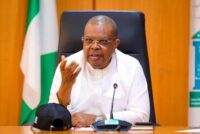
The agency’s Director-General, Dr Jide Idris, said the financial assistance became necessary after some individuals identified as contacts raised concerns about the cost of feeding themselves, securing accommodation and providing for their families while complying with isolation and monitoring requirements.
Idris disclosed that the intervention was introduced as an emergency measure rather than an arrangement included in the original response plan. He explained that authorities would continue to assess the support as the situation develops.
He also cautioned against leaving the responsibility for managing such emergencies to the Federal Capital Territory alone, insisting that state governments must be prepared to provide the resources needed for contact tracing, isolation and other public health activities if similar situations arise.
The development follows the confirmation of an imported case of Ebola disease in Abuja on October 20, 2026. The infected woman had reportedly travelled to Nigeria from Uganda before developing symptoms and subsequently testing positive for the Bundibugyo strain of the virus.
According to the NCDC, 53 primary contacts had been identified for monitoring as investigations expanded to establish everyone who might have been exposed. The group includes healthcare workers, household members and other individuals who interacted with the patient.
Health officials are continuing daily surveillance, while anyone who develops symptoms is expected to undergo prompt medical assessment. The agency is also strengthening infection prevention measures in healthcare facilities and improving preparedness to prevent further transmission.
The NCDC has urged Nigerians to cooperate with public health officials, provide accurate information when contacted and avoid spreading unverified reports about the outbreak.