

Every second brings Nigerians closer to exercising their democratic right and shaping the future of our nation.
Exercise your democratic right responsibly, peacefully and lawfully.
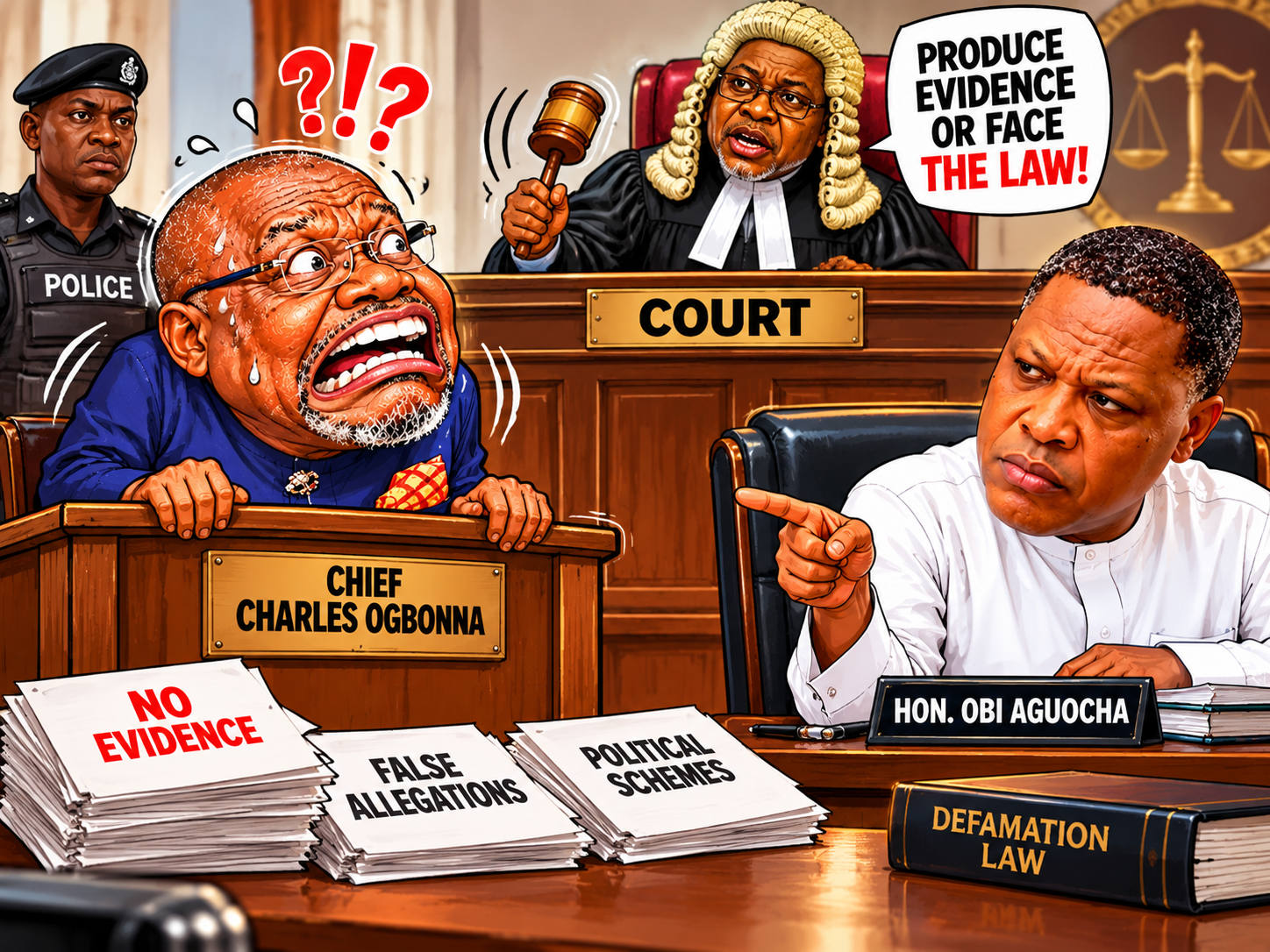
When an elder opens his mouth without facts, the damage can be greater than the noise he makes. When a respected community leader trades wisdom for reckless accusations, he does not only embarrass himself; he undermines the very values his age and position should represent. Society does not confer respect on elders merely because they have lived long; it expects them to demonstrate sound judgment, restraint, integrity, and the courage to distinguish truth from falsehood. Sadly, some individuals who should be guiding society have become willing participants in the dangerous culture of unverified allegations, political mudslinging, and character assassination.
In their desperation to discredit perceived opponents or regain political relevance, they make serious accusations without first establishing the facts. Let it be understood that a loud voice is not evidence, a public accusation is not a conviction, and the repetition of a rumour does not transform it into the truth.
What is particularly disturbing is when individuals who should know better, especially elders and respected community leaders, become promoters of unverified claims. Age is supposed to bring wisdom, experience, restraint, and sound judgment. Elders occupy an important position in our communities because younger generations look up to them for guidance on morality, fairness, conflict resolution, and responsible conduct. When an elder abandons these responsibilities and resorts to reckless accusations, the damage goes beyond the immediate target. It undermines the very values that should distinguish maturity from youthful impulsiveness. Our elders must understand that respect is not sustained by age, titles, or political connections alone; it is earned through character, wisdom, and responsible leadership.
There is a clear difference between holding public officials accountable and making baseless allegations against them. In a democracy, nobody should be above scrutiny, whether a governor, legislator, commissioner, local government official, traditional ruler, or political appointee. Public office holders must answer legitimate questions about their conduct, decisions, and management of public resources. However, accountability must be driven by facts, documents, credible witnesses, and verifiable evidence—not rumours, political propaganda, personal resentment, or the desire to attract public attention. Anyone who claims that public funds or relief materials have been diverted should be prepared to present evidence to the appropriate authorities. Serious allegations demand serious proof. Where evidence exists, let it be presented through lawful channels. Where it does not, wisdom demands restraint rather than reckless speculation.
Those who make unsubstantiated accusations must also understand that their words can have serious consequences. A person’s reputation, built over many years of public service, business, or community engagement, can be damaged by a single irresponsible statement. Families can become targets of hostility, communities can be divided, and political disagreements can degenerate into unnecessary bitterness. Depending on the circumstances, false or defamatory allegations may also attract legal consequences. Freedom of expression is a fundamental right, but it does not grant anyone an unlimited licence to damage another person’s reputation. Every citizen must learn to distinguish between expressing an opinion, asking legitimate questions, reporting a concern in good faith, and presenting an unverified accusation as an established fact.
Political competition makes this warning even more necessary. As the 2027 general elections approach, political actors and their supporters must resist the temptation to turn every disagreement into a campaign of character assassination. Elections should be about ideas, performance, competence, policies, and the future of our communities. They should not become a marketplace of rumours where the most outrageous allegation receives the greatest attention. Those who disagree with a public official should explain their position, identify shortcomings, and offer credible alternatives. If a public official has failed, the facts should speak. If a politician has performed well, the achievements should be presented for public assessment. Politics must never become an excuse for abandoning truth, and the pursuit of power must never take precedence over personal integrity.
Our traditional rulers, religious leaders, professional bodies, community elders, and other respected stakeholders have an even greater responsibility to promote responsible public discourse. They must be prepared to caution their own people when they cross the line, regardless of political affiliation or personal relationships. Leadership is not demonstrated by the ability to mobilise people against an opponent; it is demonstrated by the courage to demand fairness from one’s own side. An elder who knows that an allegation is unverified should not amplify it simply because it favours a preferred political camp. Instead, such a person should ask essential questions: What are the facts? What evidence supports this claim? Has the accused been given a fair opportunity to respond? Is the statement intended to serve the public interest or merely to settle a personal score? These questions are not signs of weakness. They are the hallmarks of maturity, justice, and responsible leadership.
Ultimately, every individual must remember that public speech comes with responsibility. Before accusing another person of wrongdoing, verify the information, consider the consequences, and be prepared to substantiate the claim. Where a mistake has been made, the honourable response is to acknowledge it, retract the false statement, and offer an appropriate apology. No one loses dignity by correcting an error; rather, the willingness to admit a mistake is evidence of strength of character. Our communities need elders who unite rather than divide, leaders who enlighten rather than mislead, and citizens who defend truth rather than spread rumours. Let those who have genuine evidence come forward through the proper channels, and let those who have none exercise restraint. The time has come for our elders to lead by example, for our politicians to embrace issue-based engagement, and for every citizen to understand that an allegation without evidence is not accountability—it is a potentially destructive exercise in irresponsibility. A society that excuses reckless speech from its elders should not be surprised when its younger generation abandons the values those elders were meant to protect.