


Every second brings Nigerians closer to exercising their democratic right and shaping the future of our nation.
Exercise your democratic right responsibly, peacefully and lawfully.
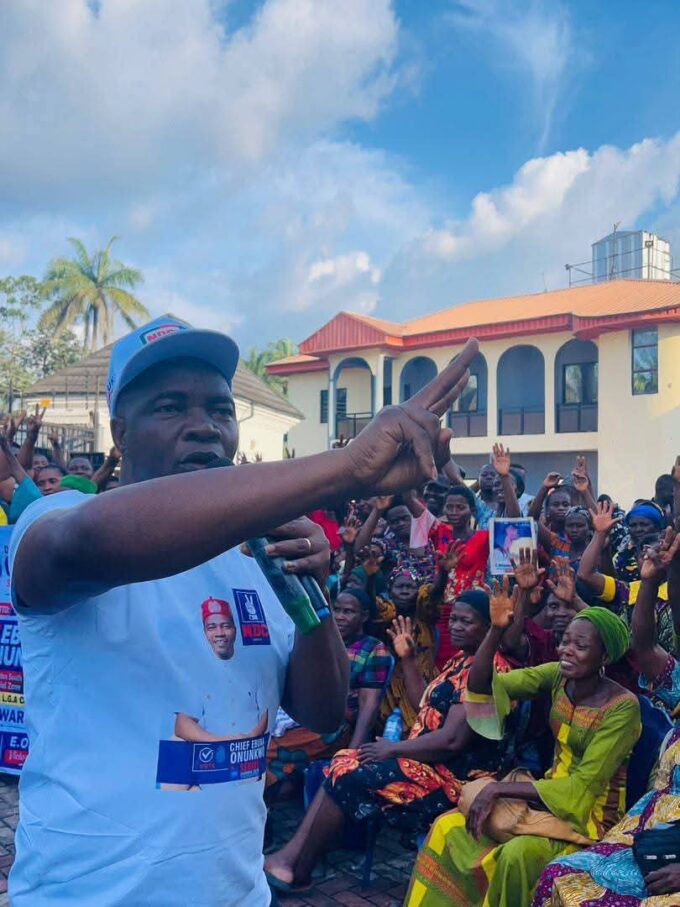
Hon. Paschal Karibe Ojigwe, the National Democratic Congress (NDC) candidate for Bende Federal Constituency in the 2027 House of Representatives election, has emphasised the importance of road infrastructure in promoting economic growth, improving access to essential services and connecting communities across Bende. He described accessible road networks as an important part of rural development, noting that farmers, traders, students and other residents depend on reliable transportation to carry out their daily activities.
Speaking on the development needs of the constituency, Ojigwe said, “Roads are not just pathways connecting one community to another; they are lifelines that connect our people to opportunities. When a farmer cannot move his produce to the market because of a bad road, when a student struggles to get to school, or when a patient finds it difficult to reach a hospital, we must understand that road infrastructure is directly connected to the welfare of our people.”
The NDC candidate noted that improving road networks would help farmers transport agricultural produce, enable traders to reach markets and create better conditions for commercial activities. He stressed that communities should be able to access essential services without unnecessary transportation difficulties, particularly during the rainy season. “Our people deserve roads that can support their economic activities throughout the year. We cannot talk about agricultural development without considering how farmers will transport their produce. We cannot talk about growing local businesses without creating an environment where goods and services can move freely from one community to another,” he said.
Ojigwe also called for proper drainage systems, quality construction and regular maintenance of roads, arguing that infrastructure projects should be designed to provide lasting benefits rather than temporary relief. “A road project should not end with the commissioning ceremony. We must ask questions about its quality, its durability and the people it is serving. The objective should be to provide infrastructure that will remain useful to our communities for many years, not projects that deteriorate shortly after construction,” he stated.
On the responsibilities of federal representation, Ojigwe explained that a lawmaker must engage relevant government agencies and pursue infrastructure initiatives that address the needs of constituents. He said collaboration with state and local authorities would also be important in determining how road challenges could be addressed. “Federal representation is about taking the concerns of our people to the appropriate authorities and ensuring that those concerns receive attention. We must maintain regular communication with our communities, understand their challenges and work towards solutions through the available legislative and institutional channels,” he said.
Ojigwe further stressed the need for inclusive development and public accountability, urging residents to participate in discussions about projects affecting their communities. He maintained that infrastructure development should not be restricted to particular areas but should respond to the needs of communities across Bende. “As we look towards the future of Bende, our development conversation must be about every community, every family and every individual. The people must be part of the development process, their voices must be heard when projects are being planned, and they must be able to ask questions about the execution of those projects. Development becomes more meaningful when it responds to the genuine needs of the people and when there is accountability at every stage,” he said.
Beyond his commitment to infrastructure development, Karibe Ojigwe’s international exposure adds another dimension to his vision for Bende Federal Constituency. His supporters believe that his broader outlook and understanding of development beyond Nigeria can help introduce fresh perspectives and innovative ideas to address local challenges. By drawing lessons from successful development models around the world and adapting them to the realities of Bende, Ojigwe is positioned by his supporters as a candidate capable of promoting modern infrastructure, expanding economic opportunities and encouraging sustainable community development. His emphasis on connecting rural communities to markets and essential services reflects a vision of progress in which Bende can benefit from global ideas while remaining firmly rooted in the needs and aspirations of its people.