
Every second brings Nigerians closer to exercising their democratic right and shaping the future of our nation.
Exercise your democratic right responsibly, peacefully and lawfully.
The Central Bank of Nigeria (CBN) is intensifying efforts to improve financial cooperation with China, with discussions underway to address transaction difficulties faced by businesses operating between the two countries.
The initiative comes amid growing commercial relations between Nigeria and China, where businesses rely on efficient payment arrangements to import goods, settle obligations and pursue investment opportunities.
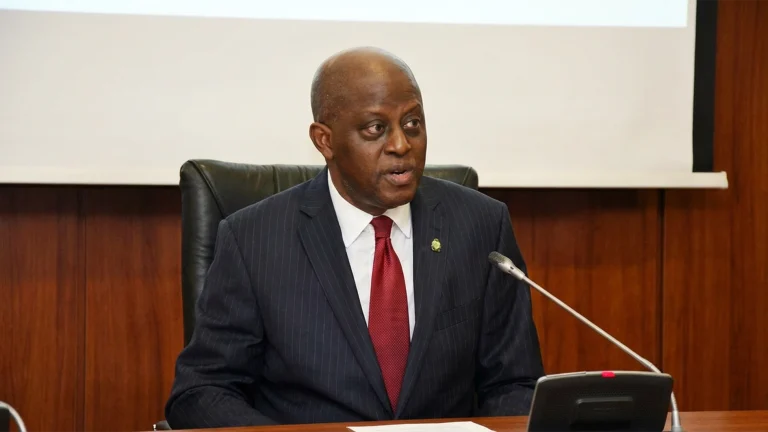
CBN Governor Olayemi Cardoso led a Nigerian delegation to a financial and business meeting in Beijing on October 21, where participants examined ways to strengthen banking relationships and improve the movement of funds across both markets.
The meeting provided an opportunity for business operators to explain the practical challenges affecting their transactions. Representatives also examined the possibility of expanding Nigerian banks’ operations in China to give traders and investors better access to financial services.
Cardoso said engaging directly with the private sector was necessary to understand the problems businesses encounter and develop appropriate responses. The apex bank is expected to use the feedback from the discussions to guide further engagement with relevant financial institutions.
Among those who participated were CBN Deputy Governor for Economic Policy, Philip Ikeazor; Nigeria’s Ambassador to China, retired Lieutenant General Abdulrahman Dambazau; Blue Diamond Group Chairperson Festus Mbisiogu; and CIG Motors Chairperson Diana Chen.
The delegation’s programme includes engagements with the People’s Bank of China and the Industrial and Commercial Bank of China, two institutions whose participation could help strengthen financial collaboration between Nigeria and China.
The CBN is also scheduled to meet Nigerian businesspeople in Guangzhou to obtain further feedback on cross-border transfers, remittances and investment-related transactions.
For businesses in both countries, improved payment arrangements could reduce operational difficulties and make trade settlements more efficient. The discussions are part of ongoing efforts to build stronger financial connections, although the specific changes that may emerge from the engagements have yet to be detailed.