


Every second brings Nigerians closer to exercising their democratic right and shaping the future of our nation.
Exercise your democratic right responsibly, peacefully and lawfully.
A significant number of Nigerian children are facing serious difficulties with basic literacy, with about 70 per cent of those below the age of 10 reportedly unable to read and comprehend a simple sentence.
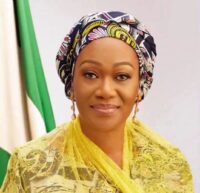
The National Coordinator of Human Capital Development 2.0 and Special Adviser to the President on the National Economic Council and Climate Change, Rukaiya el-Rufai, disclosed this during a media engagement in Abuja.
She said the situation showed that being enrolled in school did not necessarily guarantee that children were gaining the fundamental literacy and numeracy skills needed for their future education and employment.
El-Rufai warned that the learning deficit could affect Nigeria’s ability to produce workers capable of meeting the technical demands of modern industries. She noted that some specialised occupations require strong foundational knowledge, including mathematics and geometry.
She said the Human Capital Development 2.0 programme was therefore prioritising education alongside healthcare, skills development and livelihoods, with states expected to develop interventions based on their specific challenges.
The programme is also tracking indicators such as learning poverty, out-of-school children, child health and the number of young people who are neither employed nor undergoing education or training.