

Every second brings Nigerians closer to exercising their democratic right and shaping the future of our nation.
Exercise your democratic right responsibly, peacefully and lawfully.
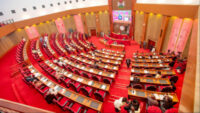
The House of Representatives has passed a bill for second reading seeking to establish a nationwide legal framework for deceased organ and tissue donation and transplantation in Nigeria. The proposed legislation aims to improve patient safety, protect donors and their families, and ensure that transplant procedures are carried out under clear medical and ethical standards.
The bill, sponsored by Deputy Speaker Benjamin Kalu and six other lawmakers, also proposes the establishment of a National Deceased Donation and Transplantation Authority to oversee and coordinate organ donation activities across the country. During deliberations, co-sponsor Patrick Umoh stressed that Nigeria needs a structured system to prevent exploitation and build public confidence in organ transplantation.
Under the proposed framework, donated organs would be distributed through a national allocation and matching system, supported by an official waiting list. The process would be guided by medical needs rather than a recipient’s financial status, political connections or social standing. The bill also states that a patient should not be excluded from the waiting list solely because of an inability to pay.
The legislation outlines rules for voluntary consent, the identification of suitable donors, the recovery and preservation of organs, and the accreditation of transplant facilities and professionals. It also seeks to prohibit organ trafficking, commercial dealings in human organs, transplant tourism and brokerage. In addition, the determination of death would remain independent of the organ donation process, with safeguards for independent confirmation.
The proposed law further provides for counselling and bereavement support for donor families, protection of confidential medical information, and regular reporting to promote transparency. Following its passage at second reading, the bill is expected to proceed for further legislative consideration by the relevant committee before any final decision on its enactment.